Many amateur golfers struggle with a persistent slice—an all-too-familiar shot that starts left (for right-handers) and veers sharply right, often resulting in lost balls, frustration, and higher scores. If you’re reading this, there’s a good chance you’ve tried to “shallow” your downswing to combat the problem. But what if the way you’re implementing this fix is actually making things worse?
The better move starts earlier than most golfers think. The key coaching checkpoints are how the pelvis sways during the backswing, whether it recenters before the player reaches the top, whether the pelvis starts the downswing before the chest, arms, and club, and whether the player creates useful X-Factor Stretch in transition.
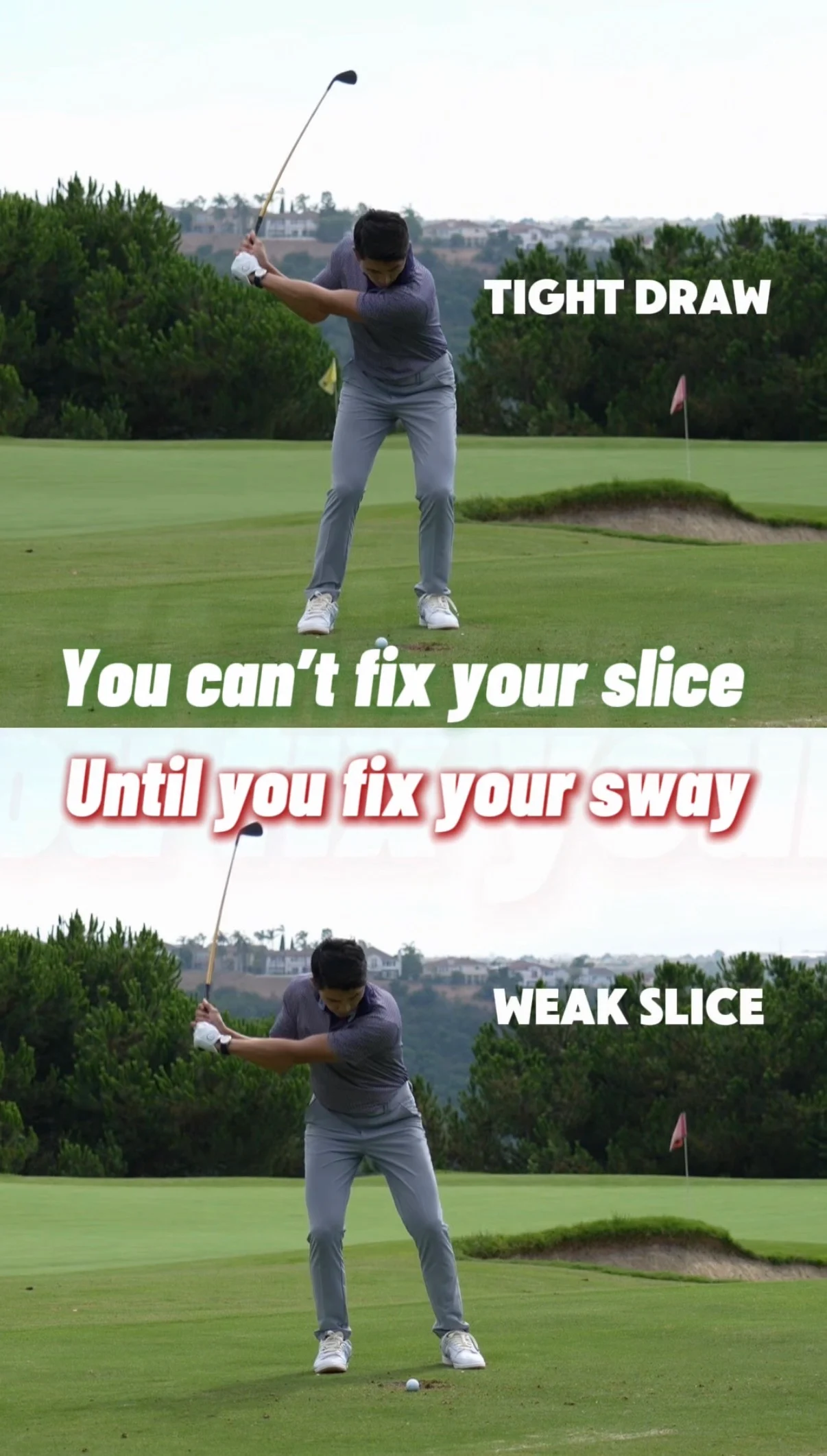
The Persistent Slice — Golfer’s Lifelong Nemesis
A slice generally occurs when your clubface is open to your swing path at impact. Most golfers know they need to get the club “working more from the inside” to produce a draw or, at the very least, straighten out their flight. This has led to the popularity of “shallowing the club” in countless instructional videos and articles.
But while the intention to shallow is correct, the way many amateurs physically try to do it creates compensations. They focus on moving the club instead of organizing the body sequence that gives the club room to shallow naturally.
The Biomechanics of the Slice
Let’s simplify the movement pattern behind a typical slice.
- Too much negative Pelvis Sway in the backswing: The player loads too far onto the trail side and stays there too long.
- No recentering before the top: If the pelvis has not started moving back toward the target before the backswing finishes, the player begins transition from behind the ball with limited space to sequence correctly.
- Upper body starts first: The chest, shoulders, arms, or club get ahead of the pelvis. The club is thrown out and over the plane instead of being pulled into position by the lower body.
- Lost torso-pelvis separation: Without the pelvis leading, the player loses the opportunity to create X-Factor Stretch in transition.
This is why actively dropping the trail elbow or laying the club off can fail. The club may look shallower for a moment, but if the pelvis has not recentered and initiated the downswing, the player often compensates with early extension, a stalled turn, a flip through impact, or loss of power.
What Does It Mean to “Shallow” the Club—Really?
Proper shallowing is the result of a sequence—not an isolated arm position.
What Many Players Actually Do
- Drop the hands or elbow: The player tries to place the club behind them instead of creating space with the pelvis and torso.
- Stay loaded on the trail side: Pelvis Sway remains too negative approaching the top, so the body has not recentered in time.
- Start down with the upper body: The chest or arms move before the pelvis, pushing the club outward.
What the Better Move Does
- Recenter before the top: Pelvis Sway begins moving back toward zero while the backswing is still finishing.
- Start the downswing with the pelvis: The pelvis leads, followed by the chest, arms, and club.
- Create X-Factor Stretch: Because the pelvis starts while the torso briefly remains behind, torso-pelvis separation increases during transition.
That sequence creates room for the arms and club to work down without forcing them behind the body.
Sportsbox 3D Data: A Modern Lens on the Problem
Until recently, diagnosing these nuances required slow-motion video and a good eye. Sportsbox makes the sequence measurable through Pelvis Sway, the Transition Sequence tile, and X-Factor Stretch.
1. Pelvis Sway: Load, Then Recenter Before the Top
Pelvis Sway shows how far the pelvis moves away from or toward the target. A player can load into the trail side during the backswing, but the movement should not continue away from the target all the way to the top.
The key coaching checkpoint is the reversal: the pelvis should begin recentering before the player reaches the top of the backswing. By the top, Pelvis Sway should be close to zero rather than deeply negative.
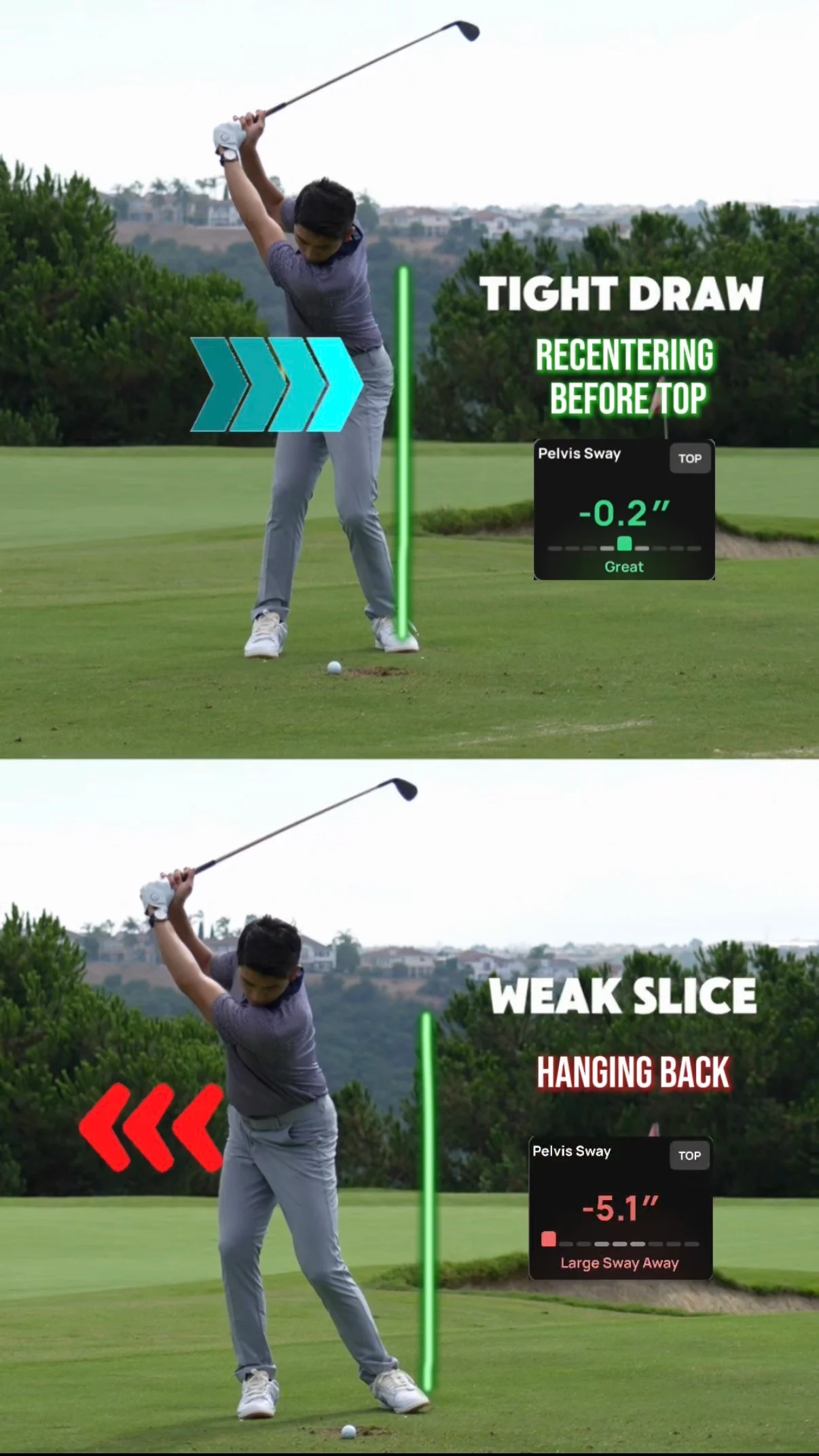
In this comparison, the tight-draw pattern has already returned to -0.2 inches at the top, while the weak-slice pattern remains at -5.1 inches. The important lesson is not to copy one exact number. It is to measure whether the player has reversed direction early enough to begin transition from a more centered position.
2. Transition Sequence: Pelvis First
Once the player has recentered, the pelvis should be the first segment to start the downswing. The desired Sportsbox Transition Sequence is:
- Pelvis
- Chest
- Arm
- Club
If the upper body or arms get ahead of the pelvis, the club is more likely to move out toward the ball and over the plane. When the pelvis leads, it creates the rotational and positional conditions that allow the club to shallow as a consequence.
3. X-Factor Stretch: Preserve Separation in Transition
X-Factor Stretch measures the increase in torso-pelvis separation as transition begins. The pelvis starts toward the target and begins opening while the torso briefly remains behind. That stretch reflects a lower-body-led sequence rather than the chest and pelvis unwinding together.
This is an important coaching link: recentering places the pelvis in position to lead, the pelvis-led transition creates the correct segment order, and that order gives the player an opportunity to produce useful X-Factor Stretch.
What You Should Actually Do
Step 1: Train the Recenter Before the Top
Do not wait until the backswing is finished to move toward the target. Practice allowing Pelvis Sway to reverse while the arms and club are still completing the backswing. Use Sportsbox to check both the maximum negative sway and the value at the top.
Step 2: Let the Pelvis Start the Downswing
From the recentered position, feel the pelvis begin the downswing before the chest, arms, and club. The goal is not to spin the hips as fast as possible. It is to establish the correct order: pelvis, chest, arm, club.
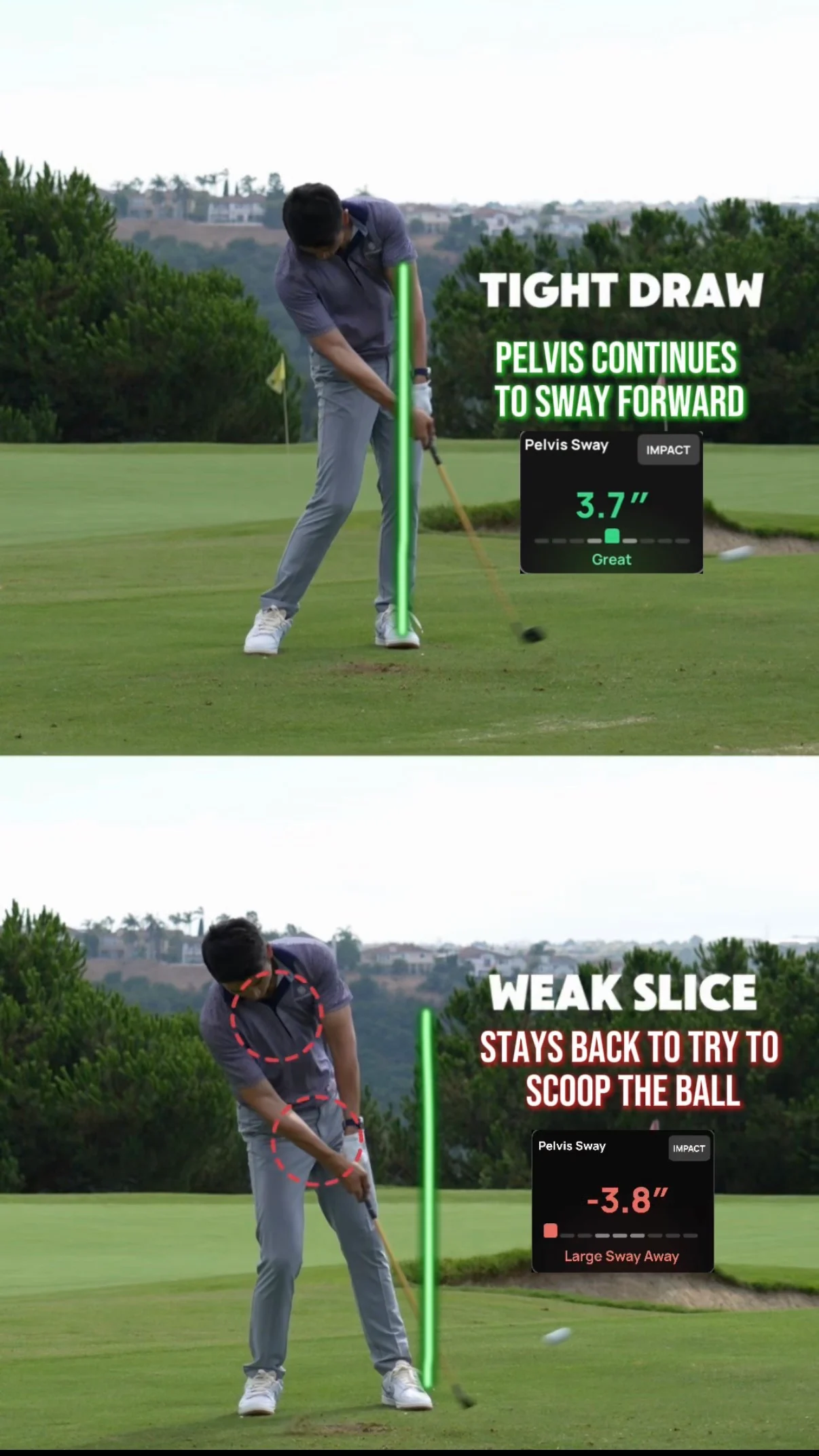
The tight-draw pattern continues moving forward to 3.7 inches at impact, while the weak-slice pattern remains back at -3.8 inches. Again, use the values to understand direction and sequence—not as universal targets for every golfer.
Step 3: Check X-Factor Stretch
Confirm that the torso does not immediately race ahead with the pelvis. A useful increase in X-Factor Stretch shows that the pelvis has begun transition while the torso briefly maintains separation.
Step 4: Let the Club Respond
Once the pelvis has recentered, initiated the downswing, and created separation from the torso, the arms and club have more room to work down. Wrist structure and clubface control still matter, but they should support the sequence rather than replace it.
How Sportsbox Can Help You Train These Moves
Sportsbox feedback can show:
- How negative your Pelvis Sway gets in the backswing—at maximum sway, it should not move past roughly -2 inches
- How much you have RECENTERED with Pelvis Sway at the top—it should be close to 0 inches
- What your TRANSITION SEQUENCE tile shows—it should read 1, 2, 3, 4: pelvis, chest, arm, club
- How much X-Factor Stretch you create as the pelvis begins the downswing
Read these measurements together. Pelvis Sway tells you whether the player loaded and recentered in time. Transition Sequence shows which segment started first. X-Factor Stretch shows whether the pelvis and torso created useful separation.
Instead of guessing whether the club “looks shallow,” coaches can identify where the sequence actually breaks down and give the player one measurable priority.
The Bottom Line
Shallowing the club can help fix a slice, but it should emerge from the movement sequence—not from dropping the arms behind the body.
The coaching progression is:
- Control Pelvis Sway in the backswing.
- Recenter before reaching the top.
- Start the downswing with the pelvis.
- Preserve X-Factor Stretch as the torso follows.
- Let the arms and club respond to the space the body created.
Use Sportsbox to measure each part of that sequence. When the pelvis recenters on time and leads the downswing, the player has a much better opportunity to deliver the club from the inside and replace the weak slice with a tighter, more repeatable draw.